Digital LinQ

Connecting Products, Data, and Customers and bringing added value to a 2D-Code using GS1 Digital Link standards

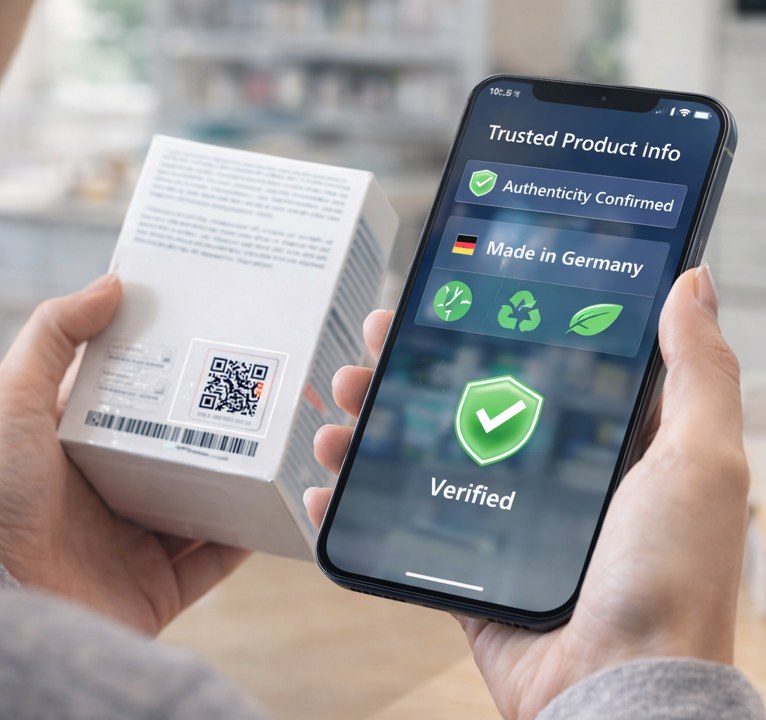
Digital LinQ connects physical products with trusted digital information through a single, standardized code.
Request a demo

By scanning a 2D code such as a QR Code or Data Matrix, stakeholders can securely access product data tailored to their needs - from regulatory and supply chain information to sustainability, authenticity, and consumer-facing content.

Digital LinQ enables transparency, compliance, and future-ready product communication across the entire product lifecycle.

With Digital LinQ you get in a fast way closer to your customers because it enables brands to move from static, one-way labeling to a two-way digital dialogue using a single scan from a smartphone.

Benefits of Digital LinQ

Manufacturers (Brand Owners)

  • ✓ Single global identifier linking physical products to digital content
  • ✓ Regulatory readiness (DPP, ePIL, serialization, traceability)
  • ✓ Dynamic content updates without changing packaging
  • ✓ Improved product authenticity & anti-counterfeiting
  • ✓ Lifecycle data management (manufacturing, distribution, end-of-life)
  • ✓ Reduced operational complexity by replacing multiple codes
  • ✓ Better consumer engagement through trusted product information
  • ✓ Scalable platform for future regulations and markets

Retailers

  • ✓ Standardized product information access via existing scanners
  • ✓ Improved inventory & product data accuracy
  • ✓ Simplified recalls and traceability
  • ✓ Enhanced trust in product authenticity
  • ✓ Reduced dependency on proprietary systems
  • ✓ Seamless integration with POS and backend systems
  • ✓ Future-proof scanning infrastructure (2D-ready)
  • ✓ Instant access to trusted product information
  • ✓ Authenticity verification at point of use
  • ✓ Clear sustainability & recycling guidance
  • ✓ Multilingual and country-specific content
  • ✓ Improved transparency and trust
  • ✓ No app required - simple scan with smartphone camera
  • ✓ Safer purchase decisions

Digital Product Passport (DPP)

The Digital Product Passport (DPP) is a digital product identity that stores key information about a product.

The DPP aims to increase transparency and support a circular economy.
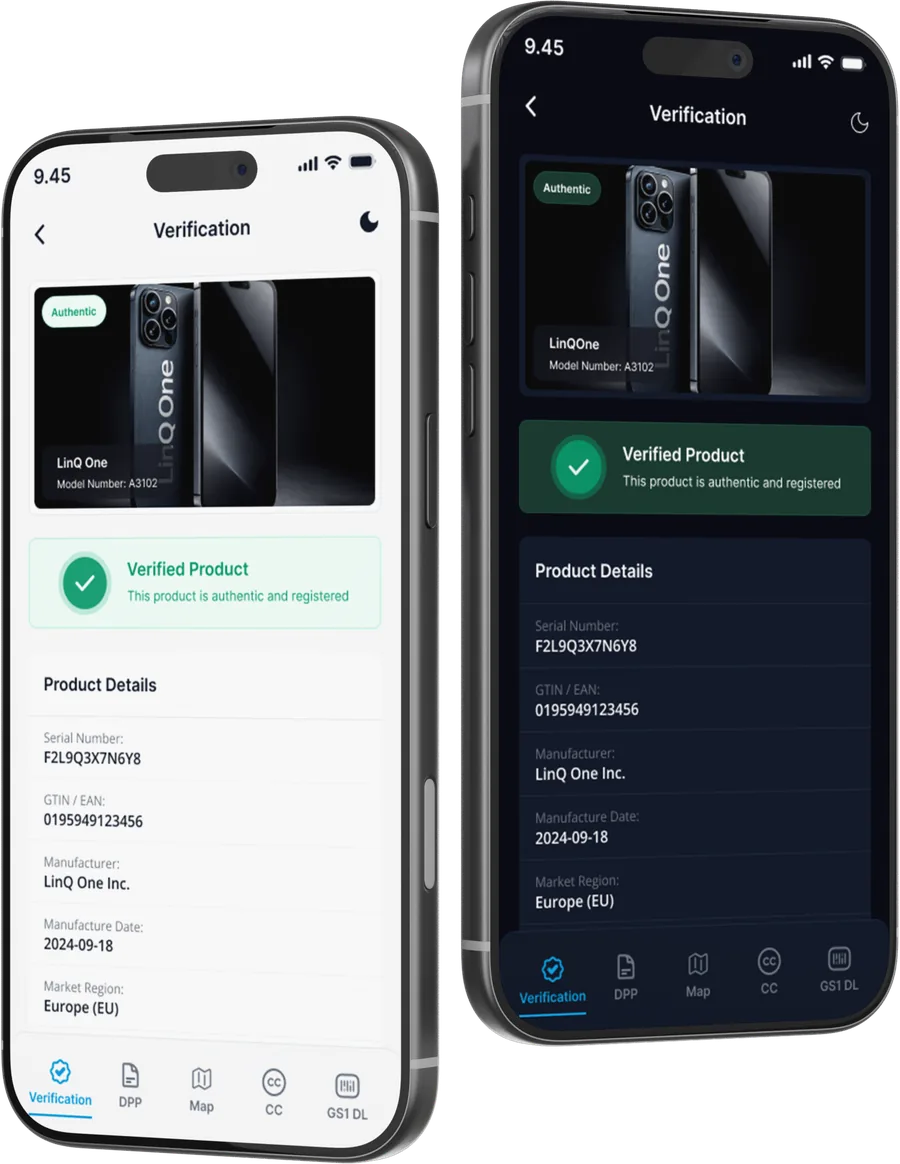
Included details:

  • Materials and components
  • Manufacturing location
  • Repairability and durability
  • Recyclability
  • Origin of raw materials
  • Environmental impact

Benefits of the Digital Product Passport

More transparency

Consumers and authorities can easily see what materials and components a product contains.

Improved recyclability

Recycling companies can identify how to dismantle and recycle the product correctly.

Increased sustainability

The DPP helps reduce waste, conserve resources, and lower CO2 emissions.

Supports repair and reuse

Repair guides and spare parts information become easier to access, extending product lifespan.

Enhanced consumer safety

Hazardous materials or recall information can be communicated faster and more reliably.

More efficient supply chains

Companies can better trace the origin of materials.

How does the Digital Product Passport work?

  • 1. Data is collected: Manufacturers, suppliers, and other stakeholders record product information throughout the supply chain.
  • 2. Data is stored centrally: Information is stored in a digital database or on a dedicated platform.
  • 3. A unique product code is generated: Each product receives a unique digital code (e.g., QR code or RFID) that links to its DPP.
  • 4. The code is attached to the product: The code can be printed on packaging, applied to the product, or included in the documentation.
  • 5. Anyone can access the DPP: Users can scan the code with a smartphone or access the DPP via a platform.

Future-ready solutions for today's challenges.

Stay ahead with tools designed to streamline workflows, enhance security, and adapt as your business grows.

Request a demo